There is a moment that almost every parent looks forward to with the exact same excitement: the first spoonful. Most of the time it doesn’t land where it should – half stays on the chin, a bit on the bib, and if we’re lucky, some actually reaches the baby’s mouth. But beyond these emotional first moments for parents, something far more interesting begins inside a baby’s body.
Until around six months of age, a baby’s food world consists almost exclusively of milk. Suddenly, however, the body has to learn to recognize vegetables, fruits, grains, meat, and eventually their first dairy products.
It is one of the most spectacular periods in a child’s development. They discover new flavors, their digestive system begins to transform, and their first food preferences emerge.
An entire ecosystem is changing inside a baby’s body
In recent years, the microbiome has become one of the most studied topics in medicine. Simply put, the microbiome is the community of billions of microorganisms living in our gut that participate daily in digestion, immune system development, and even the way the body learns to distinguish between food and a potential “invader.”
In the first months of life, this ecosystem is still very young; then weaning begins. Every new food the baby comes into contact with nourishes different types of bacteria. Some help digest the fibers in vegetables. Others break down the starches in grains and others participate in fermenting components of dairy products.
As meals become more varied, the microbiome becomes richer. And this is excellent, because a diverse microbiome is associated with the healthy development of both the digestive and immune systems.
How to start introducing solid foods to babies
Around 6 months of age, solid foods – whether pureed or offered in age-appropriate textures – enter the diet to complement the nutrients and vitamins the baby’s body begins to need during this period. Weaning is a complex process that requires patience and attention.
To determine when weaning can begin, pediatricians first look for a few readiness signs: the baby holds their head up well, can sit upright with support, opens their mouth when seeing a spoon, no longer automatically pushes food out with their tongue (loss of the tongue-thrust reflex), and seems curious when watching others eat. Only then is their body ready to learn to move food with the tongue, swallow new textures, and gradually participate in family meals.
At 6 months, one of the crucial nutrients is iron. That is why pediatric guidelines recommend that the first foods include iron-rich options: well-cooked pureed meat, iron-fortified cereals, well-cooked egg yolk or whole egg, thoroughly cooked legumes, or other age-appropriate foods tolerated by the baby. Iron supports red blood cell production, brain development, and immune function.
A pace generally recommended by pediatricians is to introduce one new food at a time in small quantities, then allow a few days for observation. Parents usually wait 3 to 5 days before introducing the next new food, so they can clearly identify if an adverse reaction occurs: a rash, vomiting, diarrhea, significant discomfort, or any other unusual signal. A teaspoon or two at first is plenty. During this stage, the goal is for the baby to learn and become familiar with the taste, texture, and – most importantly – the routine and gesture of eating.
Start with vegetables: zucchini, carrot, pumpkin, sweet potato, thoroughly cooked broccoli. Then move to fruits, preferably plain without added ingredients: baked apple, pear, banana, peach. Pediatric guidelines often note that early exposure to vegetables helps children accept them more easily in the long run, especially since a sweet taste is naturally easier to love. And we know how it goes: between broccoli and a banana, the banana starts with a clear advantage. That is precisely why vegetables require a bit more patience.
Accepting a new food is rarely decided on the first spoon. Sometimes not even on the fifth. Parenting guidelines note that a child may need 8 to 15 exposures before accepting a new flavor. A first rejection doesn’t necessarily mean they dislike it; it just means they need more time to get used to the taste and texture. After an initial refusal, you can try again a few days later, at a different time of day, in a slightly different texture, and without pressure.
At first, foods are finely pureed or mashed smoothly. By around 8 months, thicker textures, coarser purees, and larger but very soft pieces suitable for the child’s age (as recommended by your pediatrician) can be introduced. Between 8 and 12 months, the baby can gradually be offered finely chopped foods, soft pieces, and safe finger foods they can pick up themselves. Shape and texture matter immensely here: foods must be soft, easily squished between fingers, and cut in ways that present no choking hazard.
Combinations follow once individual ingredients have been introduced separately. For instance, banana yogurt makes sense only after the baby has tried both yogurt and banana separately and tolerated them well. Successful weaning isn’t about mixing many ingredients right away, but careful progression: one flavor today, another a few days later, and then combining the two.
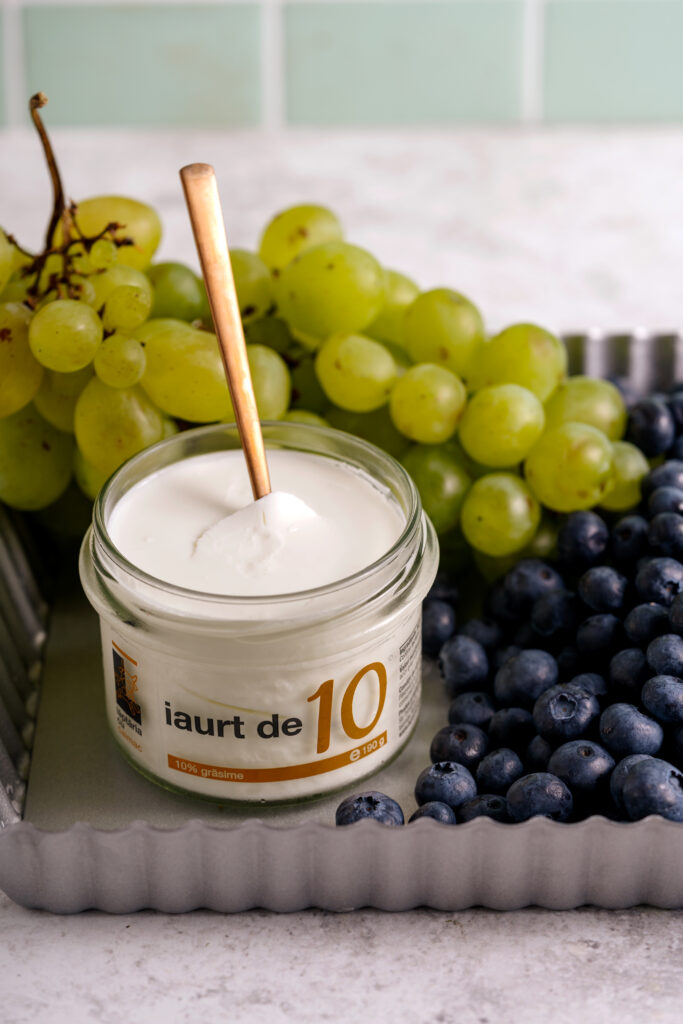
This is where yogurt fits in naturally. It is one of the most suitable initial dairy products once the baby has accepted solid foods. Plain, natural, unflavored, and unsweetened yogurt is recommended by pediatric guidelines before 12 months, unlike fluid cow’s milk as a main drink, which remains appropriate only after 1 year of age.
Fresh unripened cheeses can also be introduced during this period in plain forms with no added salt, depending on the product and medical advice. They pair nicely with baked or steamed vegetables, delivering protein and calcium in a different texture than yogurt. Kefir can come a bit later once yogurt is well tolerated, as it is a more complex fermented dairy product.
Perhaps the best guiding principle remains: mealtime is a meeting. The child learns, the parent observes, and foods find their place on the plate step by step, with care and purpose. Iron comes early because the body needs it. Vegetables enter early because fiber plays a vital role and tastes are developed early. Fruit comes without added sugar because it is great as it is, naturally. Yogurt is introduced plain and pure because fermentation makes it ideal for this stage. And fluid cow’s milk waits a bit longer, because every food has its time.
Dairy in weaning: why start with yogurt instead of fluid milk?
If yogurt is made from milk, why is one recommended during weaning while the other has to wait? The answer lies in the fermentation process.
Yogurt isn’t just milk; it is milk that has undergone a natural process where lactic cultures transform a portion of the lactose, creating a new food with a distinct texture and fermentation-specific beneficial bacteria. This makes yogurt one of the most suitable dairy products for early weaning. It is far easier to digest for a small stomach just beginning to explore solid food.
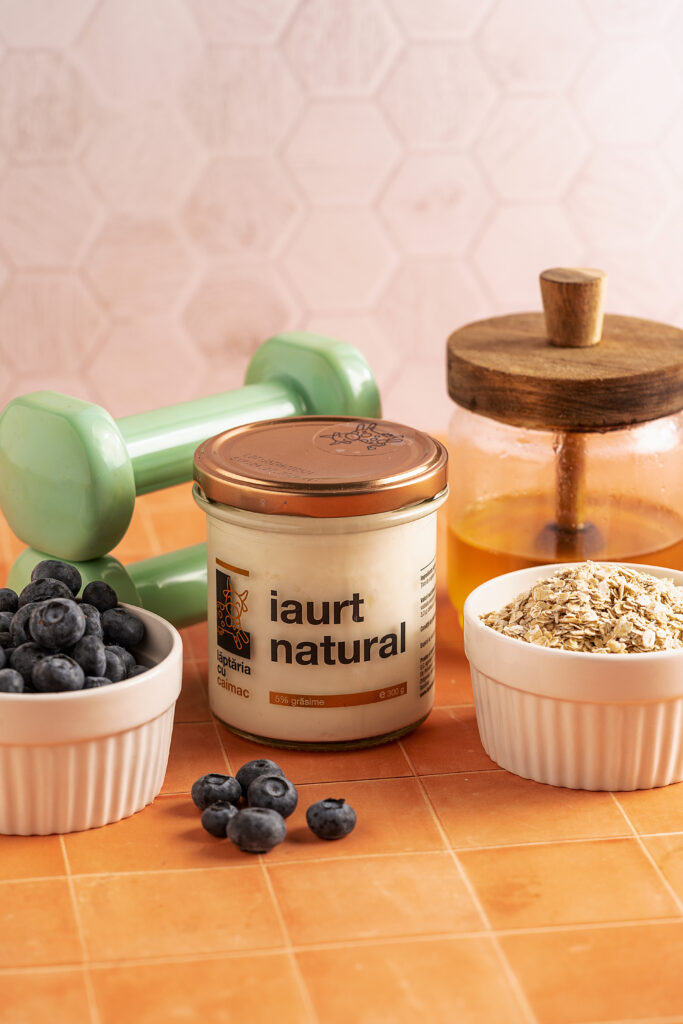
Nutritionally, yogurt is one of the most complete foods to introduce at this stage. A portion provides high-quality protein necessary for tissue and muscle development, calcium for healthy bone and tooth development, and B-complex vitamins involved in metabolism.
In contrast, drinking cow’s milk as a primary beverage is not recommended before one year of age. During their first year, an infant has specific nutritional requirements that fluid cow’s milk alone cannot adequately fulfill.
Why do pediatricians recommend whole, natural yogurts over low-fat options?
During the first two years of life, a child’s brain develops at an extraordinary pace, reaching nearly 80% of its adult volume by around age two. During this window, dietary fats play an essential role in nervous system development and in absorbing fat-soluble vitamins such as A, D, E, and K.
For this reason, international guidelines recommend choosing full-fat, unsweetened yogurt without added ingredients when introducing dairy. This is not the time for “light” or reduced-fat products. At this stage, children need healthy fats in their easily digestible natural form, just as they occur in whole-milk yogurt.
Why are food combinations so important?
In weaning, it is not just about the individual food you choose, but what you pair it with. A baby’s body processes a meal not as isolated ingredients, but as an ensemble of nutrients working together. For example, pairing yogurt with fruits like pear or baked apple provides a combination of protein, calcium, and soluble fiber. The fiber feeds beneficial gut bacteria in the microbiome, while protein and calcium complete the meal’s nutritional value.
Adding grains like oats or millet makes the meal more satisfying and delivers complex carbohydrates that release energy gradually.
When fresh cheese is combined with vegetables like broccoli or sweet potato, the baby explores new tastes while receiving protein, calcium, vitamins, and fiber in a single meal.
We can sometimes forget that a baby isn’t looking for the variety adults seek. They are learning: every new food is a lesson, every texture an experience, and every flavor a reference point. The first months of weaning are about patience, clean ingredients, and giving them time to explore. A child may need many exposures to the same food before they truly discover and accept it. It is a complex learning process, and parental patience is key to building the foundation of a healthy relationship with food.
Three simple starter recipes
Yogurt bowl with baked apple and oats
Baked apple is easier to digest than raw apple and contains pectin, a soluble fiber that nourishes the gut microbiome. Oats provide beta-glucans, fibers studied for their prebiotic effects. Yogurt rounds out the meal with protein, calcium, and live active cultures.
- ½ sweet apple
- 3-4 tbsp plain whole-milk yogurt
- 1 tbsp fine rolled oats
Bake the apple for about 20 minutes at 180°C (350°F) until very soft. Meanwhile, soak the oats in a little warm water or simmer for 3-4 minutes. Puree the apple, mix with the oats, and let the mixture cool completely. Fold in the yogurt only after cooling so the live cultures are not exposed to high heat.
Fresh cheese with broccoli and sweet potato
Broccoli is an excellent source of vitamin C, while sweet potato supplies beta-carotene and complex carbohydrates. Fresh cheese completes the dish with protein, calcium, and a creamy texture.
- Steam the broccoli for 6-7 minutes.
- Bake the sweet potato for about 35 minutes until soft.
- Puree them separately. Add two tablespoons of fresh cheese and fold together gently, allowing the baby to experience distinct textures.
Yogurt with pear and millet
Cook the millet until very soft, allow it to cool, and mix with plain whole-milk yogurt and pureed baked pear. The result is a balanced meal rich in protein, fiber, and complex carbohydrates.
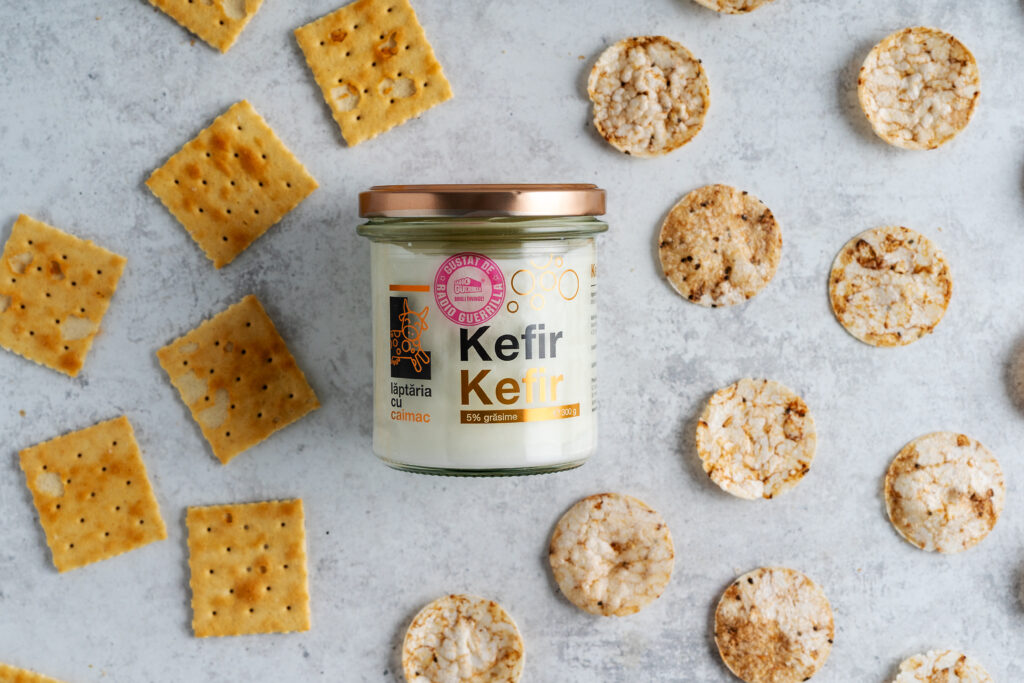
Kefir with banana and oats (after introducing kefir)
Blend plain kefir with a well-ripened banana and a small amount of soaked oats. This creates a creamy mixture suitable for babies already accustomed to fermented dairy.
First taste experiences stay with us for life
Weaning is about how a child begins to discover food: with wonder, hesitation, successful and unsuccessful attempts, tastes accepted on the spot, and flavors that take several encounters to become familiar. Slowly and unhurriedly, the first building blocks of a healthy relationship with food are established during this time. Every spoonful, clean ingredient, and calm meal helps a child learn that eating can be a source of curiosity, trust, and joy.
At Lăptăria cu Caimac, we often think about the relationship with food we inspire in our children – perhaps because our products are made, above all else, to be served to our own kids. To us, a serving of yogurt is one of a child’s very first encounters with the true flavor of milk, its natural texture, and the realization that good food doesn’t need long ingredient lists to be delicious and nourishing. The early stages of weaning pass quickly, but the way we learn to eat well and enjoy real food lasts a lifetime. The best habits start right here: with patience, gentleness, and a small spoon of something good.