From the seeds we grow to feed our cows to the glass bottle that reaches your refrigerator, we do things with care, transparency, and no shortcuts. Milk offers extraordinary benefits when it is treated with respect: minimally processed, safe, nutritious, and with that authentic taste you instantly recognize.
And when it comes to lactose-free dairy products, we keep the same care at the heart of our production processes. Our Gingas range (the name of our lactose-free line) is an alternative for those who need a gentler diet because they cannot digest the natural sugar in milk as easily. We produce them with attention and responsibility, so they are just as good, nourishing, and clean as any product that leaves our factory gates.
But let’s start from the beginning:
What is lactose, actually?
Lactose is the natural sugar found in milk, a molecule made up of two smaller “building blocks”: glucose and galactose.
Our body cannot use lactose as it is. To turn it into energy, the body must first “break it apart” into the two simple components mentioned above. This is where lactase comes in — the enzyme responsible for digesting lactose.
Think of this enzyme, called lactase, as a microscopic pair of scissors. Its role is to cut (or break down) the lactose molecule into two pieces that the body can actually use.
How does this process take place? Lactose reaches the small intestine, where the body absorbs most nutrients. The intestinal cells produce lactase, which breaks lactose down into its two components. Glucose and galactose are then absorbed through the intestinal wall into the bloodstream, where they are converted into energy for the brain, muscles, and all daily processes.
Simple. But… not for everyone.
The amount of lactase we produce differs from person to person and does not remain constant throughout life. In childhood, most people produce enough lactase, as milk is a primary food source. In many adults, its level gradually decreases in a natural process called lactase non-persistence. For some, the decrease is significant, and lactose can no longer be fully broken down.
When it remains undigested, lactose reaches the large intestine, where bacteria begin fermenting it. This can cause discomfort and the typical symptoms of lactose intolerance.
Milk protein allergy vs. lactose intolerance
When it comes to the discomfort some people experience after consuming dairy products, there is quite a lot of confusion around the terminology — especially when symptoms are not investigated or diagnosed through specific tests.
Some people talk about a “lactose allergy,” others about “milk sensitivity,” and some are not exactly sure what doesn’t agree with them. The reality is that not all reactions are the same, and our bodies can respond differently to the various components of milk.
Because we want any discussion about dairy — with or without lactose — to be clear and informed, we make a clear distinction between three completely different situations:
· cow’s milk protein allergy
· lactose intolerance (to the sugar in milk)
· the popular term “lactose allergy”
Cow’s milk protein Allergy
In this case, the issue is not the processing of milk sugar, but its proteins — casein, alpha- and beta-lactoglobulin, and others. In some individuals, the immune system mistakenly interprets these proteins as harmful agents that must be eliminated. As a result, the immune system produces antibodies against these milk proteins.
This is an immune system reaction. The body does not recognize milk protein as a beneficial nutrient, but treats it as an “intruder.” In such cases, allergic reactions can occur on the skin (redness, eczema, etc.), in the digestive system, or even in the respiratory system.
It is important to note that people with a cow’s milk protein allergy cannot consume lactose-free dairy products either.
Lactose intolerance
This is strictly a digestive issue and does not involve the immune system. The body does not produce enough lactase (the enzyme), so lactose (with its two components) remains undigested.
When the body produces too little of the enzyme needed to break down lactose, it is not absorbed in the small intestine but instead reaches the large intestine, where bacteria begin to ferment it. This is why unpleasant symptoms occur, ranging from a feeling of pressure and discomfort to bloating or more severe digestive manifestations. However, lactose intolerance is not always caused solely by lactase deficiency; it can have other causes as well.
In this case, lactose-free dairy products are recommended and generally well tolerated, because they help the body compensate for the lack of the enzyme and allow nutrients from dairy products to be absorbed properly.
What happens in the body when you are lactose intolerant?
If lactase levels are low or absent:
1. Lactose reaches the large intestine undigested
2. Bacteria ferment it
3. Lactose retains water → osmotic effect
4. Cramps and discomfort occur
“Lactose allergy”
This is a term often used, but it usually refers to lactose intolerance. A true allergy (defined as an immune system reaction) to the sugars in milk is extremely rare, as it is biologically highly unlikely.
Lactose-free dairy – how is it made?
The Gingaș range is created for everyone who wants to enjoy real dairy products, but in a form that is gentler on digestion. We start with the same good, whole milk from our own farm — we simply give it a helping hand by breaking down the natural sugar in milk into forms that are easier to absorb. The result? Products with an authentic, clean taste, made from simple ingredients and processed gently.
In the delactosing process, we add the right amount of lactase for each product and production method. For milk, which remains in contact with this enzyme for a short time, gentle pasteurization follows — the same method we’ve mentioned before that preserves the richness of nutrients. For fermented products, delactosing takes place simultaneously with fermentation. In this case, the enzyme works alongside the beneficial fermentation bacteria. For products such as Gingaș Butter, we first delactose the cream it is made from during its maturation period, before placing it in the churn to obtain the butter.
Frequently asked questions about lactose-free dairy
Is sugar added to lactose-free milk?
No. The slight sweetness you notice when tasting products from the Gingaș range is the result of lactose being broken down into the two components mentioned earlier. These — glucose and galactose — have a higher sweetening power, which is why the products taste slightly sweeter, without containing added sugar.
In addition, checking the label is essential, regardless of the product you buy. There you should find clear information about what is added and what is not.
Is it as nutritious as regular milk?
Yes. Gingaș milk contains the same proteins, natural fats, vitamins, and minerals. During the delactosing process, only the digestive difficulty is removed — not the nutrients.
Why do lactose-free dairy products taste sweeter?
Glucose has a higher sweetening power than lactose. This means that the mild sweetness you perceive in lactose-free dairy is a natural effect of breaking lactose down into its components — it is not an artificial modification.
Are lactose-free dairy products suitable for people with a milk protein allergy?
No. The milk proteins remain in the product. What changes during the delactosing process is only the form of the sugars — from lactose (which is difficult to process for those with lactose intolerance) into its simpler components.
Are lactose-free dairy products easier to digest?
For people with lactose intolerance — yes, they are easier to digest.
For those who do not have lactose intolerance, lactose-free dairy products are not more digestible, lighter, or healthier; they may simply be chosen based on personal taste preference.
Are fermented dairy products (Yogurt, Kefir) naturally lactose-free?
No. During fermentation, the amount of lactose does decrease, but these dairy products cannot be considered lactose-free. What happens in fermented products is that the activity of lactic bacteria consumes part of the lactose and converts it into lactic acid. Therefore, regular yogurt may contain less lactose, but it cannot be classified as lactose-free.
How to choose a lactose-free product correctly
It’s simple: read the label. Look for clear mentions such as “delactosed” or “lactose content <0.01 g/100 g” (the European standard).
Is there a difference between UHT lactose-free milk and gently pasteurized lactose-free milk?
Yes.
UHT stands for Ultra High Temperature, meaning the milk is treated at very high temperatures. This results in a long shelf life, but the processing is intense, which can alter the taste and generally causes significant losses of nutrients beneficial to the body.
Gently pasteurized milk is heated at lower temperatures for a shorter time, with the goal of preserving nutrients and the authentic, natural taste of milk.
So, in both cases, you are dealing with a lactose-free product, but gentle pasteurization preserves more of milk’s valuable qualities.
Can I cook normally with lactose-free dairy?
Yes.
Lactose-free milk boils, mixes, and cooks just like regular milk. The proteins, fats, and structure are consistent across all Gingaș dairy products. The only difference is taste — most lactose-free products are slightly sweeter, without any added sugar.
Why are lactose-free dairy products more expensive?
Lactose-free dairy is slightly more expensive due to the production process, which takes longer and requires specific steps. From adding lactase to carefully monitoring time and temperature, to testing the lactose level — every step requires attention and care (and additional production costs) to ensure the products are flawless.
One major cost comes from sanitation, to prevent contamination from regular milk’s lactose. This means more frequent and thorough cleaning and temporarily stopping production multiple times.
The Gingaș Range: lactose-free dairy
At Lăptăria cu Caimac, we make both regular and lactose-free products so that everyone can enjoy the benefits of dairy in the form that suits them best.
It is important to know what you are consuming and to have the right options:
· whole, minimally processed dairy
· lactose-free dairy, when your body requires it
· products in glass bottles
· clear information on the label
We are here to provide real dairy and honest explanations — with care, science, and taste.
We named the range Gingaș because from the start, we didn’t want to create a line “without” something, but one that adds something extra: care. In the world of lactose intolerance, conversations almost always start with a list of prohibitions — no milk, no cheese, no lactose. This language often makes people feel excluded from the pleasure of real dairy. We don’t believe in exclusion. We believe in solutions that bring people closer.
So we created a range that emphasizes what it gives, not what it lacks: gentle, delicate, clean products with the same authentic taste present in all our dairy. A name that speaks of attention, not restriction. Gingaș is our way of saying there are dairy products specially made for those who need a little extra delicacy — but with the same taste, the same quality, and the same joy of a well-made glass of milk.
Lactose-Free Milk
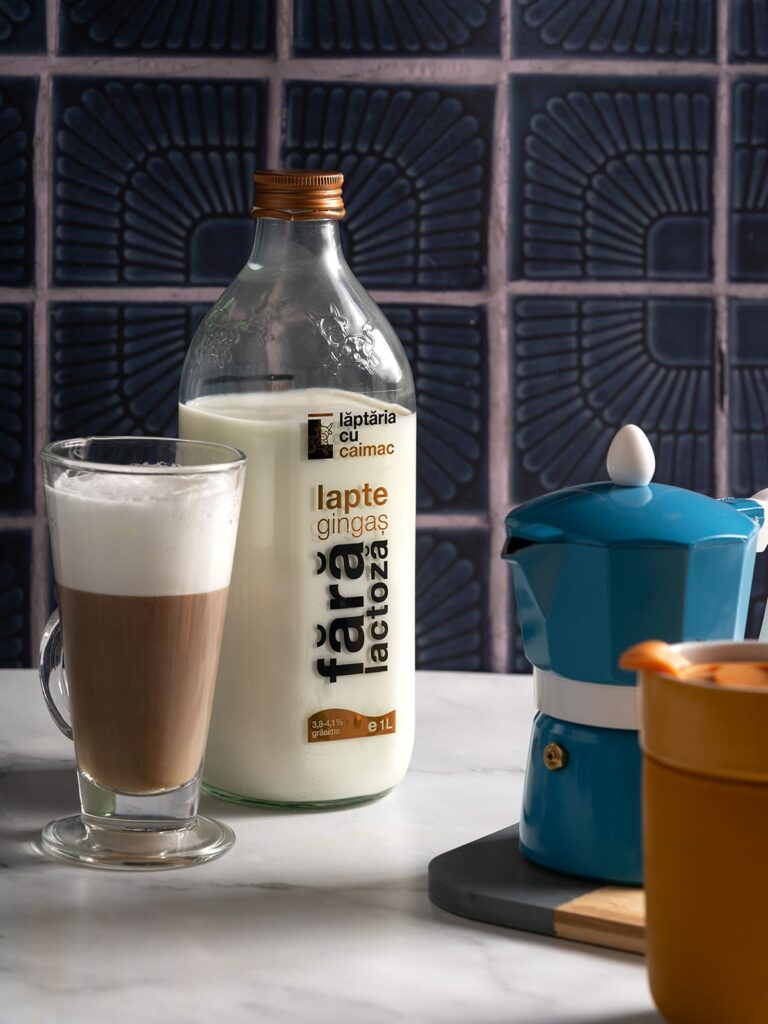
Gingaș Milk starts from the same Romanian whole milk you know: clean, freshly milked, from our own farm, and gently processed. The only difference is that we give a helping hand to digestion by breaking down lactose into simple, easily absorbed forms — without changing its taste or nutritional value.
With Gingaș Milk, you get a nutritious milk:
- with complete proteins
- with the same natural fat
- with the vitamins and minerals that make it an essential food
- with the familiar taste of milk made properly
Gentle on the stomach, simple, natural, and suitable for a delicate diet.
Lactose-Free Yogurt
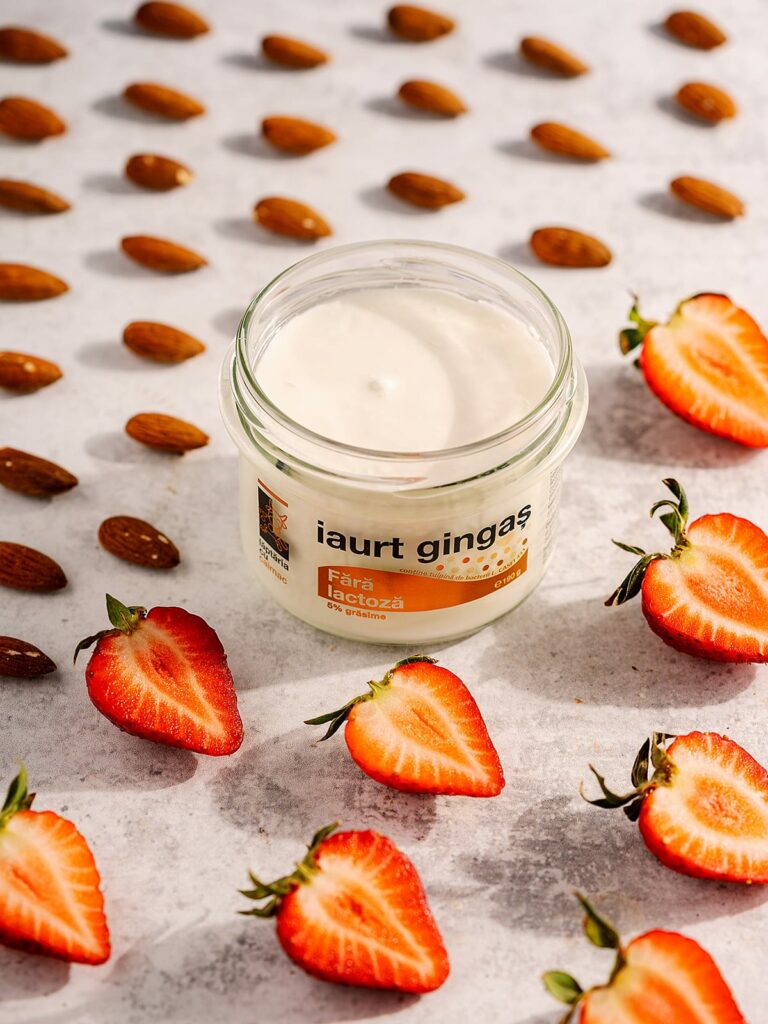
Gingaș Yogurt starts with Romanian lactose-free milk with 5% fat, gently fermented and enriched with the probiotic strain L. Casei 431, one of the most well-studied strains in the world, documented in over 90 scientific studies.
In addition to the beneficial bacteria naturally found in yogurt, L. Casei 431 provides real benefits for:
· Immune system – increases resistance to respiratory infections and reduces acute episodes.
· Gut microbiome – protects intestinal flora, reduces the risk of imbalances, and supports digestion.
· Safety at all ages – a tested strain, safe even for children.
It has a balanced, creamy, and natural taste, just as a real yogurt should, but gentler on digestion.
Lactose-Free Fresh Cheese
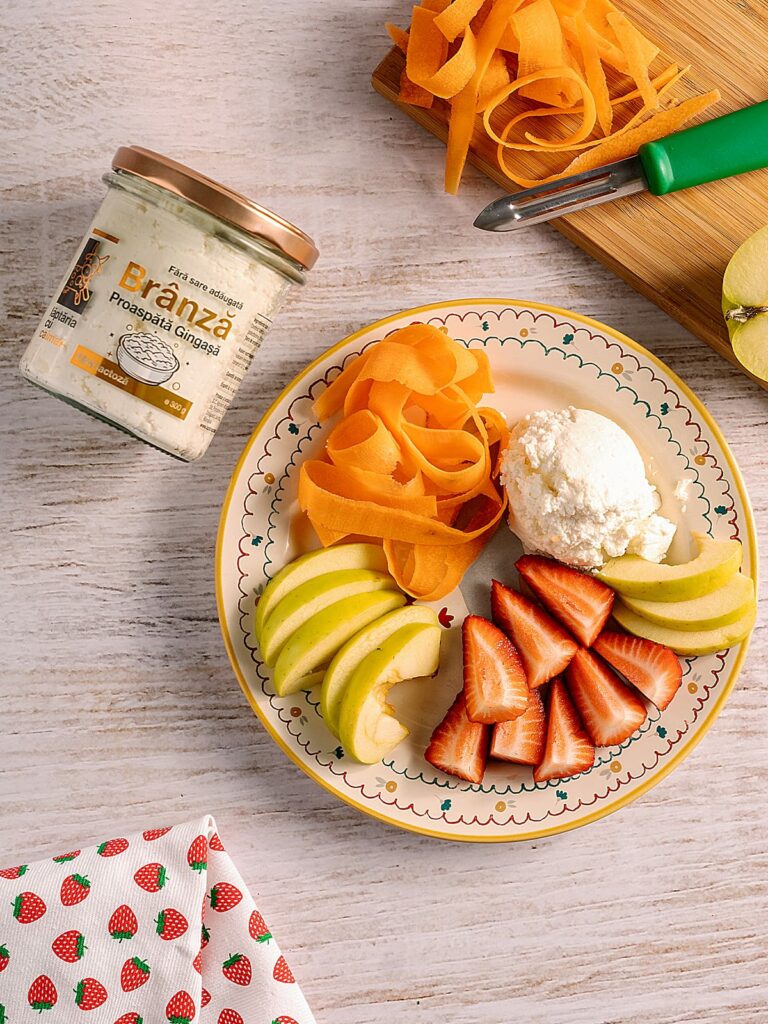
Made from Romanian lactose-free milk, with only 1% fat and no added salt, Gingaș Fresh Cheese is the ideal choice for moments when you want something light, clean, and delicate.
It has a smooth and tasty texture, pairs perfectly with fruits, vegetables, or simple recipes, and is suitable for the whole family — including young children during the weaning stage.
A gentle product for digestion, easy to include in a balanced diet.
Lactose-free kashkaval
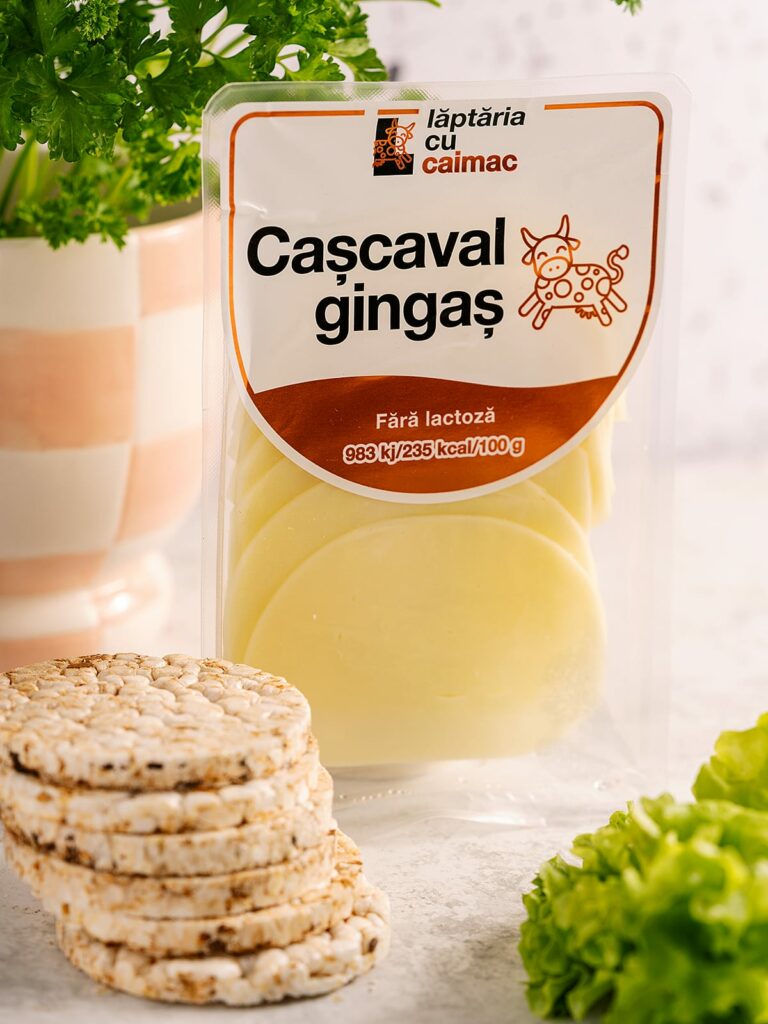
Made from Romanian lactose-free milk and gently pasteurized, Gingaș Kashkaval has a reduced fat content (12.6%) while retaining the rich, clean, and balanced flavor of a traditionally crafted hard cheese.
It’s a delicate choice for those who want a lighter product without compromising taste, and an excellent option for anyone who cannot tolerate lactose.
Finely sliced, it is perfect for sandwiches, quick snacks, omelets, or any recipe where you want the authentic taste of Kashkaval.
Lactose-free Butter
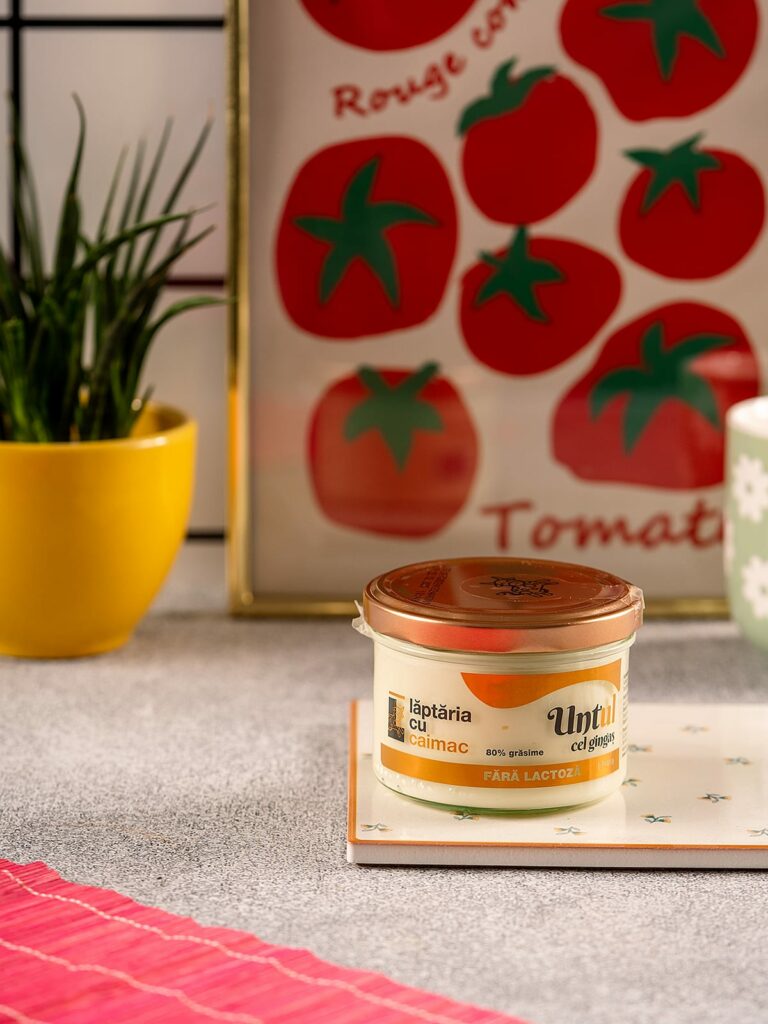
Gingaș Butter, our lactose-free butter, preserves everything you love about “Creamy Butter”: the rich flavor, velvety texture, and clean aroma of a properly made product — only gentler on digestion.
With 80% fat and Romanian milk, Gingaș Butter is perfect for smooth mashed potatoes, tender pastries, delicate creams, or simply spread on a good slice of bread.
For the full taste experience, let it sit for a few minutes at room temperature. At 12–15°C (54–59°F), it reveals its complete personality.
Lactose-free Cream
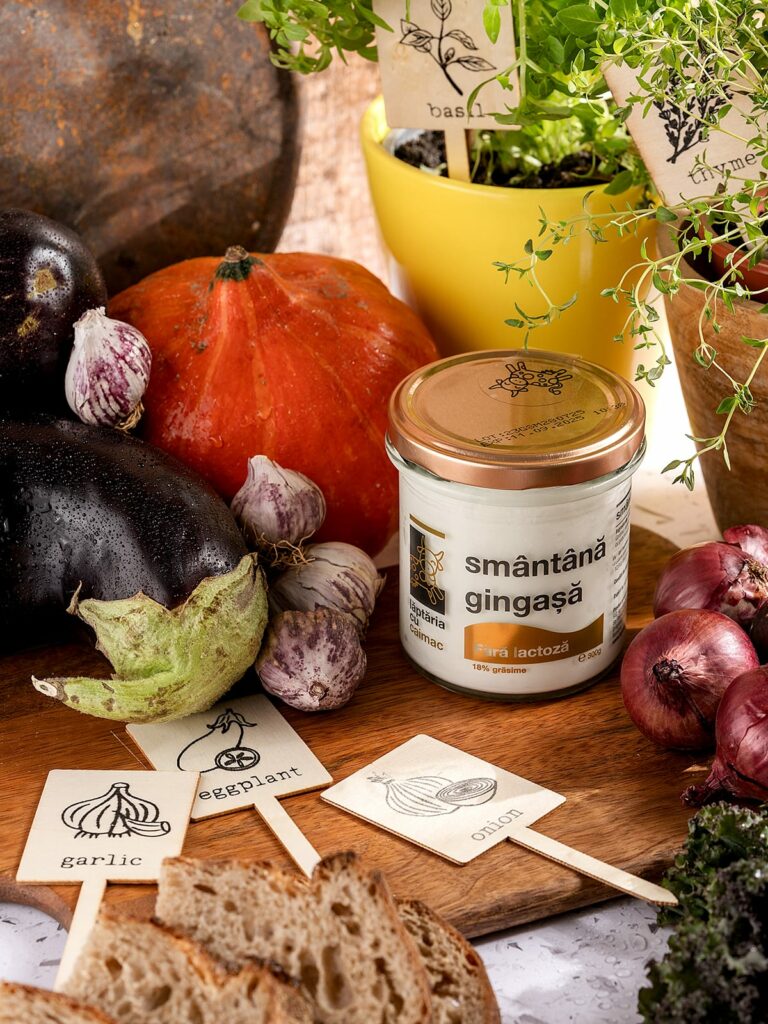
A smooth, delicate cream made from Romanian lactose-free milk with 18% fat.
Its creaminess comes naturally, from clean ingredients and our careful process — no artificial tricks.
Gingaș Cream has that balanced taste you recognize from real cream, only gentler for anyone who wants something light yet full of flavor.
Perfect for any recipe, from sauces and soups to desserts and reimagined traditional dishes.