From seed into the bottle of milk and to the community. In Romania, where our relationship with food is changing fast, farm to table means something more: trust. It’s how we rebuild our connection with real food, with people who produce it, and with the land that nourishes it.
At Lăptăria cu Caimac, this is what we’ve been doing long before we knew it had a name: we work the land, feed our animals with what we grow, and make sure our dairy products reach your table fresh, in glass bottles. That’s the only way we can guarantee true taste, quality, safety, and freshness.
Farm to table means far more than a short supply chain. It means an impact on health, on the local economy, on biodiversity, on community, and on the way we live. Europe has been studying these effects for years, and the conclusions are clear: integrated local production systems are not just a trend, but a foundation for a better food future.
Everything begins in the field — where we grow 90% of our cows’ feed.
We are a fully integrated operation, from seed to glass of milk. We cultivate 2,500 hectares of grains, alfalfa, hay, and oilseed crops to feed our cows with what is good and safe for them.
This approach gives us full traceability and, according to European studies, directly supports biodiversity: local farms reduce pressure on the soil, use fewer resources, and preserve the natural diversity of crops and livestock. In many European countries, farm-to-table systems are considered key solutions for soil restoration, pollution reduction, and even climate change adaptation.
Caring for the land begins with the agricultural techniques we implement. For example, we no longer plow the soil, and we leave straw behind as natural fertilizer. This practice — known in agriculture as no-till — allows the soil to maintain its living, rich structure without disturbing the microorganisms that keep it healthy. The thin layer of straw becomes food for these unseen “workers” of the soil, retains moisture, prevents thermal stress, and reduces evaporation. As a result, the need for synthetic fertilizers decreases, because the soil does its own work, slowly releasing nutrients from the straw.
And when the soil thrives, the harvest is more nutritious, the cows are better fed, and the milk that reaches you remains exactly as it should be: pure, balanced, and real.
For us, it all comes down to what we have known for generations: the land has its own rhythm. We respect it — and you can taste that in every glass of milk.
Our cows are well fed and well cared for.
We have approximately 3,000 animals, including 1,100 dairy cows, all raised in free-stall housing, in semi-open shelters designed to improve their quality of life. What many people don’t know is that cows handle cold weather better than heat. During the summer, we cool them with large ventilation systems, and in winter we ensure they receive optimized nutrition to help them safely get through the cold season.
We don’t have pictures of perfect green pastures — we focus on what truly benefits our animals: balanced nutrition and preventive medical care. A dedicated team of veterinarians and technicians monitors their health indicators daily to make sure everything remains within optimal parameters.
Across Europe, farms that apply similar practices are part of a category of producers contributing to a more ethical, healthier, and more transparent food system. These are farms that place animal welfare before efficiency — and this is one of the most valued qualities of a local, integrated producer.
From the farm into the bottle — just a few steps. And only 24 hours.
In 2018, we built a modern factory, a processing facility just a few steps away from the farm. The milk reaches the production line untouched by human hands or air, is gently pasteurized, and bottled within just a few hours. In our industry, time is essential. That’s why we designed a system in which freshly milked milk reaches the bottle in only few hours.
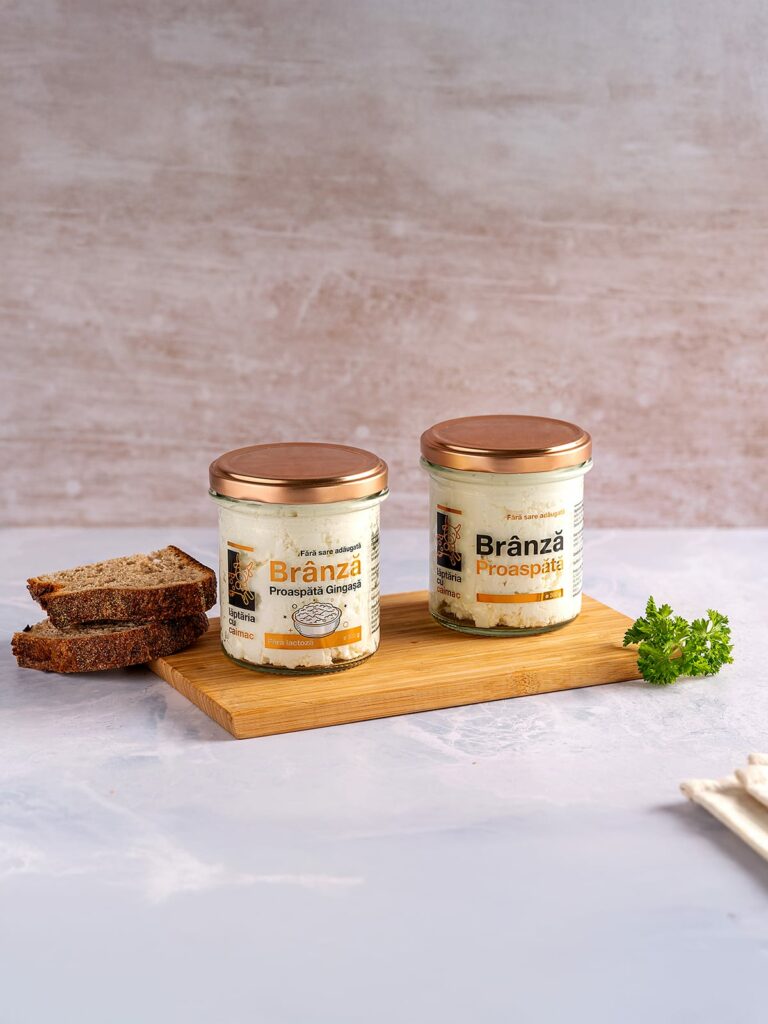
This such short distance between farm and the dairy processing facility significantly reduces emissions, energy consumption, and the risk of contamination. The goal? Lowering our carbon footprint by minimizing transportation and the energy required for prolonged refrigeration. Moreover, minimal processing itself has a positive environmental impact, in addition to the clear nutritional benefits it preserves in dairy products.
To further optimize our resources, we have integrated a complex solar panel system that now supplies part of the energy needed to operate both the factory and the farm.
In short: we have optimized an entire production system, down to the smallest detail, to offer you fresher, safer products.
Less processing. More taste.
We pasteurize our milk at gentle temperatures and for a short time, and we do not standardize the fat content of the milk in the bottle. We partially homogenize it at low pressure to preserve its natural flavor.
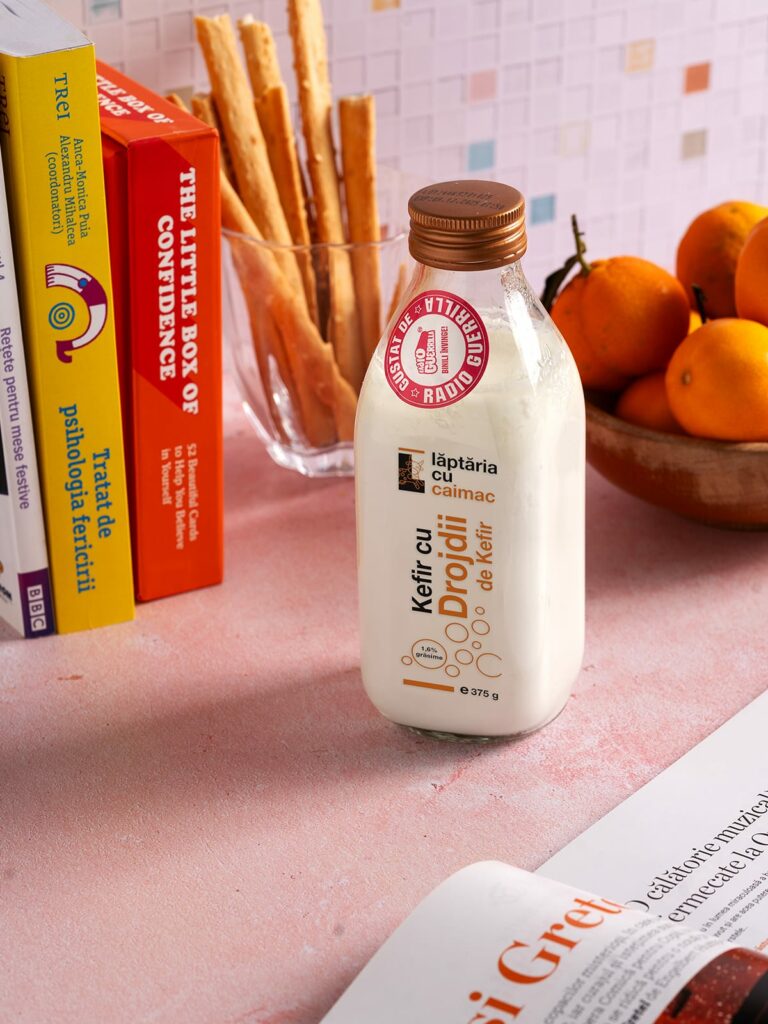
We do not use milk powder, stabilizers, or additives meant to extend shelf life, because they would compromise the taste and the product’s natural character.
What do we achieve?
Fresh dairy products with real nutritional value and true taste: the gentler the milk is processed, the closer its flavor and nutrients remain to what nature intended.
Our entire production system — from agriculture to cow care and the gentle processing of milk — is built around the idea of not wasting resources. For us, it matters to know that we are on the right side of the industry, that we work with purpose, in a Romanian company where the land, the animals, and the people are respected at every stage.
We also know that sustainability is a shared value within our community. We see it in the photos on social media — every autumn, our glass jars find a second life, filled with homemade jams, preserves, or zacuscă, neatly lined up in the pantry. Clear proof that caring for resources is what unites us — a value that matters just as much on our farm and in our factory, as it does in your homes. For those who need an extra gentle option, we also offer our Gingaș lactose-free dairy range — made with the same farm-to-table care.