Kefir may seem simple, but it holds an entire world of natural processes, living microorganisms, and subtle transformations. You can easily recognize it by its slightly tangy taste and its delicate effervescence — a sign that fermentation has done its job naturally, without shortcuts.
When you respect the ingredients and don’t rush the process, the result is a kefir that truly benefits you. A wholesome kefir, friendly to your digestion and your everyday energy. You can enjoy it in the morning, during a lunch break, or in the evening — on its own or in combinations that highlight its character.
For us, everything begins with freshly milked milk from our own farm. Then the beneficial microorganisms step in, in a complex process of double fermentation. It’s a world in itself: a living process working for flavor, digestion, and inner balance.
But to truly understand why kefir is so special, we need to look at what happens inside it – from double fermentation, yeasts, and good bacteria, to probiotics and their effect on the microbiome.
If you’re curious why kefir is so highly valued and what it must contain to be authentic kefir, let’s explore it step by step.
What are probiotics, actually?
Probiotics have a definition established by two major institutions: the FAO (Food and Agriculture Organization of the United Nations) and the WHO (World Health Organization).
In short, probiotics are live microorganisms — either bacteria or yeasts — that, when consumed in adequate amounts, provide a health benefit to the person who consumes them.
For a food to be considered probiotic, it must meet three clear criteria:
● it must contain live microorganisms
● those microorganisms must be beneficial
● they must reach the intestine in sufficient amounts to have a positive effect
Not every fermented food automatically qualifies as a probiotic. What matters is how it is made and how active those microorganisms remain up to the moment of consumption — and afterward, when they interact with the microbiome.
How Probiotics Work in Our Body
When we drink kefir or consume other fermented foods, we introduce bacteria and yeasts into our bodies that:
● can resist stomach acidity (not all bacteria manage to do this)
● reach the small intestine and the colon
● interact with our own microbiome — the totality of microorganisms living in each of our intestines
● produce beneficial substances and positively influence the existing microbial activity
This is where the major difference lies: only carefully fermented products preserve live microorganisms, while excessive processing reduces or eliminates them altogether.
What natural probiotics do we have at hand?
Natural probiotics come either from fermented dairy products — where, depending on the fermentation process, we find kefir, yogurt, sana, buttermilk, as well as certain aged cheeses — or from fermented vegetables (brine pickles, sauerkraut, kimchi, raw bors).
Probiotics are also present in sourdough bread, although it no longer contains live microorganisms after baking.
Vegetables fermented in brine (such as sauerkraut, pickled cucumbers, etc.) follow a principle similar to milk fermentation:
● bacteria naturally present on the surface of the vegetables initiate fermentation
● they consume natural sugars
● they produce lactic acid
● they lower the pH and create an environment rich in beneficial bacteria
When consumed, these bacteria also reach the intestine and contribute to maintaining a diverse microbiome. The key difference is that authentic kefir provides not only bacteria, but also specific yeasts, which enhances its probiotic potential.
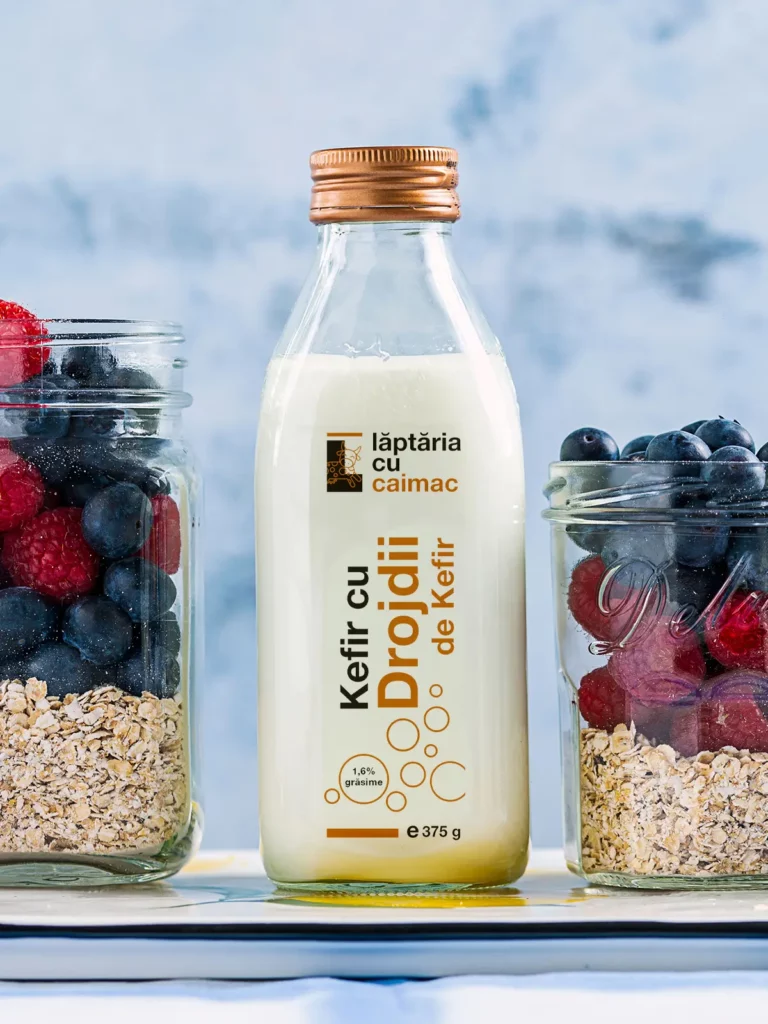
Kefir and digestion – why it’s easier to tolerate
One of the most well-known qualities of kefir is that it is very easy to digest.
In short:
· Lactic acid bacteria in kefir produce an enzyme called lactase, which is essential for breaking down lactose (the natural sugar in milk) into more easily digestible molecules.
· Lactase transforms lactose into two components that are easier to absorb: glucose and galactose.
This means two important things:
1. Part of the lactose is already broken- down during fermentation.
2. The microorganisms in kefir continue to produce lactase in the intestine.
That’s why many people who have difficulty tolerating regular milk feel fine when consuming kefir.
Important to know: kefir is NOT completely lactose-free, but it contains significantly less lactose — studies show a reduction of 70–90% during fermentation.
The benefits of kefir and the microbiome: a direct relationship with immunity and wellbeing.
The intestinal microbiome is a miniature universe: billions of bacteria, yeasts, and microorganisms living in the gut with essential roles:
● they help digest fibers and carbohydrates that the body cannot break down on its own
● they produce B-complex vitamins and vitamin K
● they regulate the immune system, distinguishing “friends” from “enemies”
● they communicate directly with the brain, influencing energy, sleep, and mood
A diverse microbiome means a more balanced body. However, the modern diet reduces this diversity. This is where natural probiotics like kefir come in: they enrich this internal ecosystem, support it, and help it remain functional and efficient.
Double Fermentation — The Secret of an authentic Kefir
Fermentation is one of the oldest processes for preserving and transforming foods, a fundamental process that we find in kitchens all around the world:
● in Asia — kimchi, miso, tempeh
● in Europe — brine pickles, sourdough bread, raw borș
● in the Caucasus and the Middle East — fermented milk drinks
● in Africa — fermented cereal porridges and beverages
Although it was originally a simple method of preservation, modern research has shown its deep benefits for digestion, the microbiome, and immunity.
Kefir is unique because it doesn’t undergo just a single fermentation, but rather two simultaneous processes:
1. Lactic Fermentation
Produced by lactic acid bacteria (such as Lactobacillus, Lactococcus, Leuconostoc):
● they transform the sugars in milk into lactic acid
● they give a slightly tangy flavor
● they provide a creamy texture
● they lower the pH, which inhibits unwanted bacteria
This is the process also found in yogurts — but it’s only half of the kefir story.
2. Alcoholic Fermentation
This type of fermentation is produced by beneficial yeasts specific to kefir.
Here a few important things happen:
● the kefir yeasts consume sugars (either lactose or the molecules resulting from its breakdown)
● they generate extremely small amounts of ethanol (similar to those found in very ripe fruit)
● they release carbon dioxide, giving kefir its natural effervescence
The two processes work together in perfect symbiosis and provide the unique properties of kefir: its complex flavor, airy texture, gently tangy aroma, and microbial diversity.
Kefir from Lăptăria cu Caimac — a kefir made the right way
Kefir is a product that cannot be rushed. To get it right, we give it time and the right conditions so that the double fermentation can do its job: lactic bacteria and the yeasts specific to kefir work together, transforming our whole milk into a balanced kefir that is easy to include in your daily routine.
Everything starts with freshly milked milk — minimally processed and obtained right on our own farm. From that point on, our role is to respect every stage of fermentation — not too little, not too much. That’s how we preserve in the kefir everything valuable from the cow’s milk, without artificial additives and without shortcuts.
The result is a kefir with a delicate, slightly tangy taste and that subtle, refreshing effervescence. A drink that gives you gentle energy: great in the morning when you need a boost, at lunch, or anytime you want something simple and healthy. You can drink it plain or use it in smoothies, desserts, or other creative combinations.
You can find it in several variants, each with its own personality:
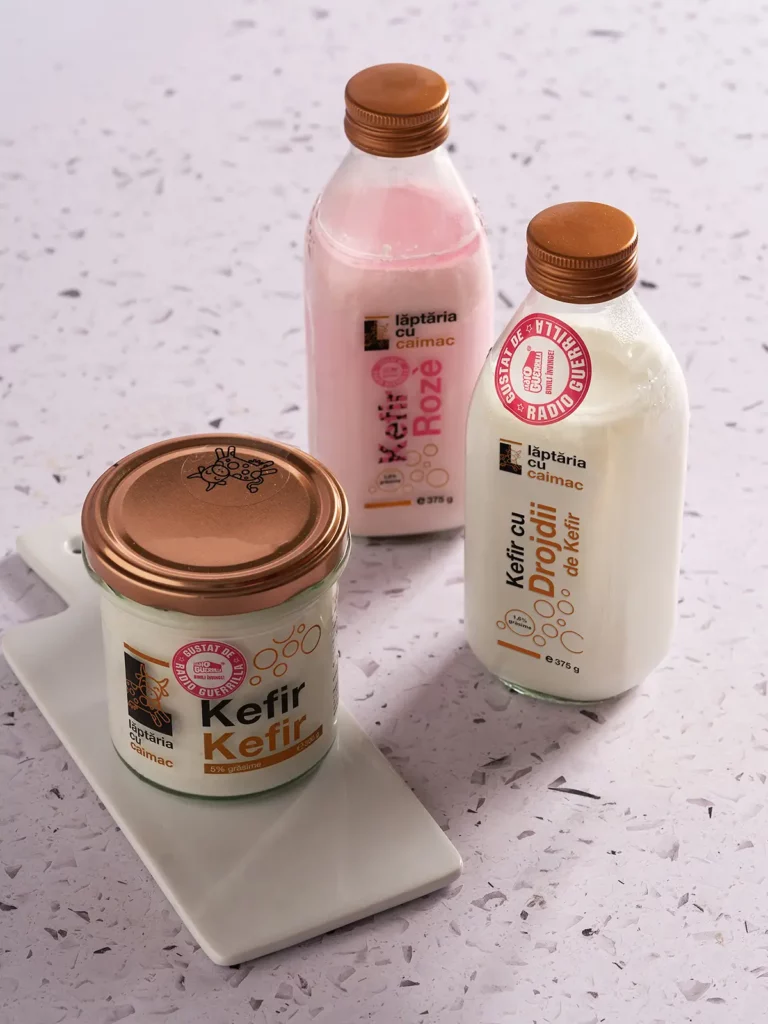
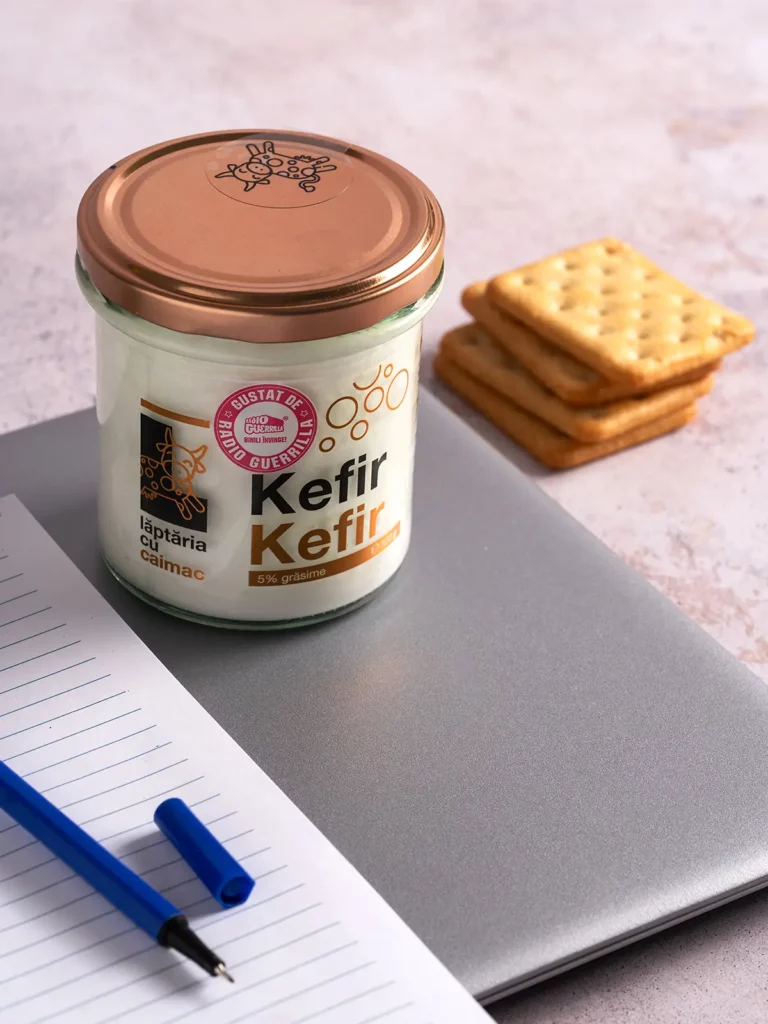
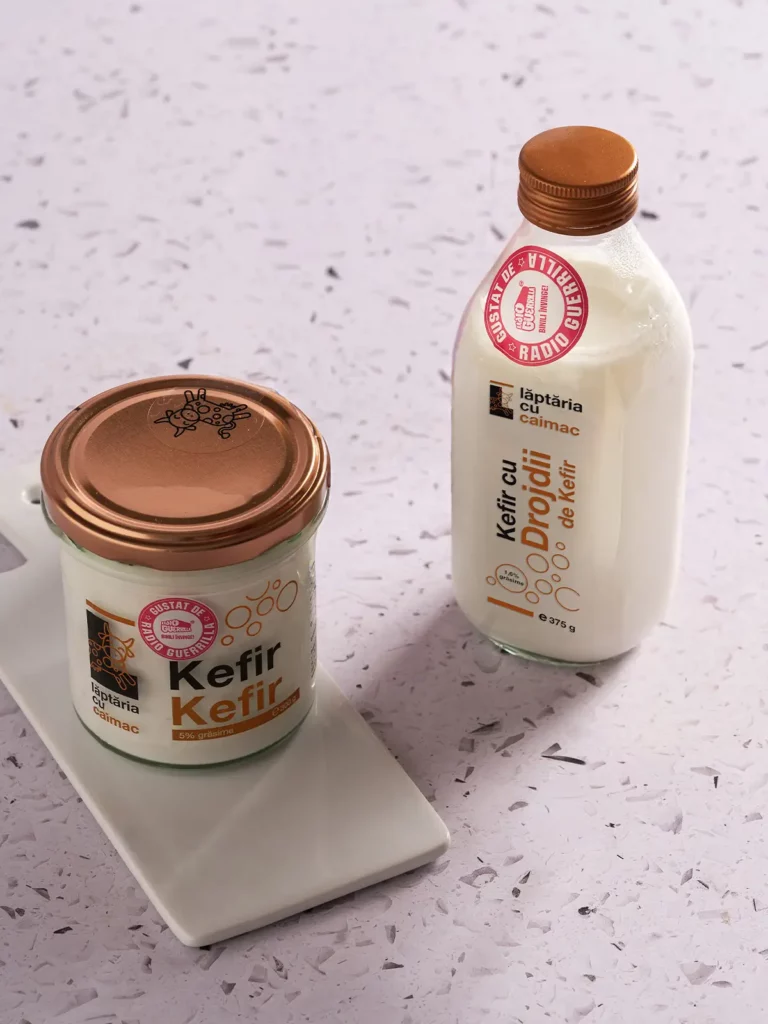
● the 300 g jar with 5 % fat — creamy and velvety.
● the 375 g bottle with 1.6 % fat — refreshing and light.
And for those who want something different, we also have Kefir Rozè — similar to the bottled kefir in terms of yeasts and lactic bacteria but enriched with natural red beet and celery juice obtained through cold pressing.
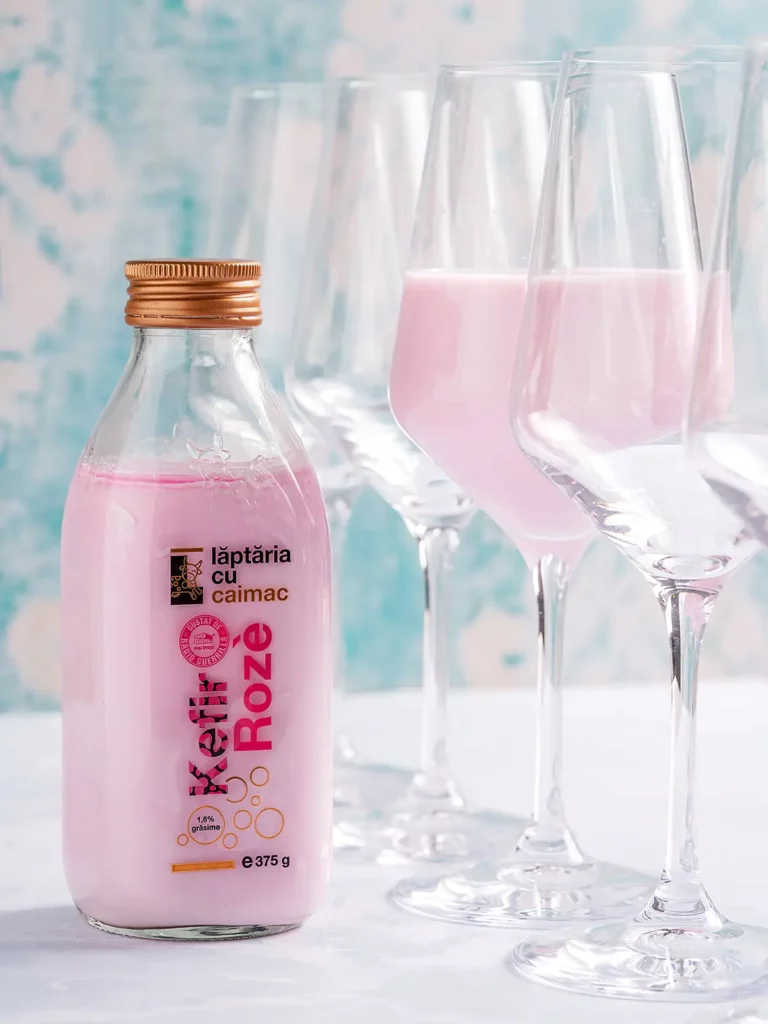
Aside from its vibrant and attractive color, the cold pressed juice helps multiply the good bacteria by acting as a prebiotic for them. In this way, we obtain a refreshing and lively variant with all the benefits we love.