You add it to coffee, pour it over oatmeal, or use it for crepes, puddings, and mashes. But behind a glass of milk lies a series of important choices: from how the cows are fed and how quickly the milk reaches the processing plant, to how the milk is pasteurized, whether its natural fat is preserved, and the packaging it reaches you in.
We chose to make whole milk that is minimally processed, gently pasteurized, and preserved in glass bottles. Each of these decisions retains something vital in the milk: its taste, natural fat, freshness, and nutrients.
What is whole milk?
Whole milk is milk that retains its natural fat. In the European Union, whole milk is generally defined as having approximately 3.5 – 3.8% fat. Semi-skimmed milk contains around 1.5 – 1.8%, while skimmed milk drops to roughly 0.5% fat.
The difference between them does not stem from a different breed of cow or another type of milk, but from processing: to achieve these exact fat percentages, the dairy industry removes or adds cream so that the milk reaches a standardized fat content level.
We chose a different path. Our milk is whole and unstandardized, meaning we do not forcibly adjust it to the exact same percentage every single day; instead, we keep its natural fat just as it comes from the farm. Nature does not work with standardized numbers. Milk fat can vary depending on feed and season, and to us, this variation has never been a problem to fix, but rather proof that we are dealing with real milk.
Why do we keep the natural fat in milk?
Fat brings flavor, texture, satiety, and plays an important role in how milk carries its nutrients. The natural fat in milk helps the body absorb fat-soluble vitamins – namely vitamins A, D, E, and K. We call these vitamins fat-soluble because they dissolve and transport much better in the presence of fat. Put simply: certain exceptional components of milk need the fat within that very same milk to be absorbed efficiently by the human body.
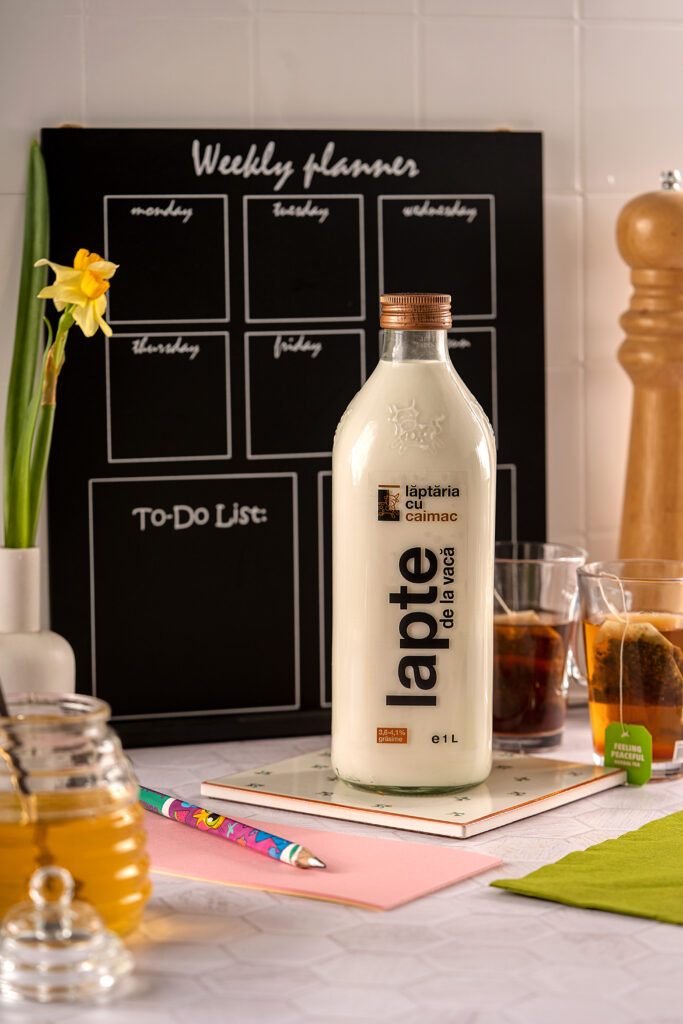
Milk also contains proteins, calcium, phosphorus, potassium, and B-complex vitamins. That is why, when discussing cow’s milk and its benefits, we should look at the bigger picture rather than focusing on a single percentage on the label.
Milk is more than the sum of its nutrients
In recent years, researchers have increasingly highlighted a concept known as the food matrix.
The core idea of the food matrix is that a food item is not merely a collection of proteins, fats, vitamins, or minerals stacked together. In genuine whole food, all these components are interconnected and work synergistically. It is precisely this natural architecture that enables the human body to utilize nutrients more effectively.
Milk serves as one of the finest examples. Proteins, natural fats, calcium, and vitamins do not exist in isolation; they are integral parts of a single structure built by nature. Consequently, the body absorbs and utilizes them differently than if it received them individually as isolated ingredients.
For this reason, discussions today focus increasingly on food as a whole. It is not just about how much calcium or how many grams of fat milk contains, but about how all these elements work together as one. This is why we believe it is essential to intervene as little as possible, preserving its original characteristics and qualities.
What is pasteurized milk?
Pasteurized milk is milk that undergoes controlled heating to eliminate bacteria that could pose health risks. Pasteurization differs from boiling and stands as one of the most vital methods for ensuring milk is safe to drink. It is crucial because it mitigates microbiological risks, allowing us to enjoy fresh milk without needing to boil it at home.
In short, if you wonder what pasteurization means, the answer is simple: milk heated just enough to be safe, then rapidly cooled and properly stored.
Gentle pasteurization: why temperature matters
Not all pasteurization methods are created equal. There is low-temperature pasteurization over a longer duration, high-temperature short-time pasteurization, and UHT (Ultra-High Temperature) treatments where milk is heated to extreme temperatures so it can last for months on shelves.
The higher the temperature and the harsher the heat treatment, the longer the shelf life. However, higher heat can simultaneously compromise the taste and damage heat-sensitive nutrients.
At Lăptăria cu Caimac, we choose gentle pasteurization because we want to preserve the balance between two equally important values: modern food safety and the authentic taste of fresh milk. We are not striving to produce milk that sits on store shelves for months; we want good, safe, fresh milk. Gentle pasteurization means applying the lowest possible pasteurization temperature necessary to guarantee safety, tailored precisely to the microbial load of the raw milk each time.
Why do we package milk in glass bottles?
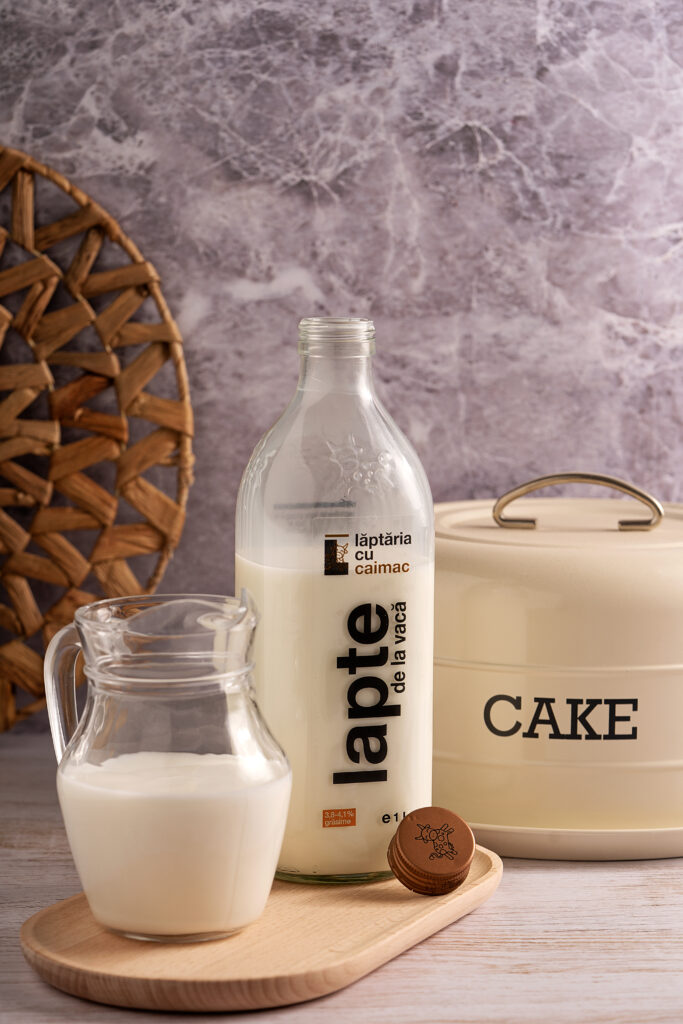
Glass is chemically inert, meaning it does not react with milk, alter its taste, or leach particles into the product – all while offering excellent protection for its contents.
In recent years, researchers have paid closer attention to how packaging materials and food processing contribute to microplastics in consumable goods. European studies indicate that these particles can originate from various sources along the supply chain: processing equipment, packaging materials, or container caps. In other words, there is rarely a single culprit; the entire path matters.
Glass offers clear advantages: it preserves the pure flavor of milk, absorbs no odors, displays the product clearly, and is 100% recyclable (it can be recycled infinitely without losing quality). Furthermore, once emptied, our glass bottles and jars enter a practical reuse cycle in households – jam, compote, honey, and pickles all find a home in our glass containers.
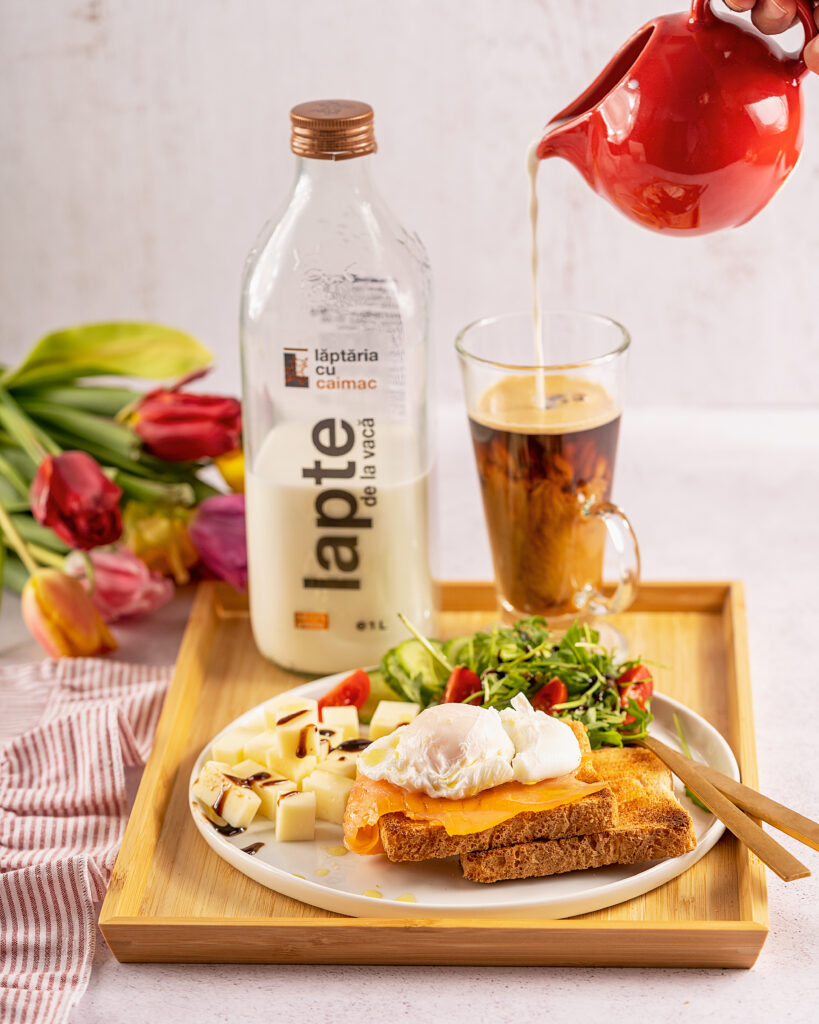
Milk is delicate and can easily absorb off-flavors if the packaging lacks proper barrier protection. Glass safeguards that clean dairy taste and helps us maintain the quality started at the farm. Additionally, under gentle pasteurization, glass helps maintain a good shelf life – short compared to shelf-stable products, but long enough to serve retail needs effectively.
From the farm to the glass bottle
Our milk travels a very short distance to reach the processing plant. The plant sits right next to the farm, and that proximity makes a world of difference. The milk reaches the production line quickly, without unnecessary air exposure, minimizing risk. It then passes through gentle pasteurization, gets bottled in glass, and heads straight to your refrigerator.
A short journey translates to freshness, reduced risk, and greater quality control. From cow feed (which we cultivate on our crop farm) to the dairy herd and the processing plant, we oversee every single step.
Why do we homogenize our milk?
If you leave fresh, raw milk undisturbed in a vessel, the fat naturally rises to the surface over time to form a cream line. This is a completely natural process.
Homogenization alters only how this fat is distributed throughout the milk. During homogenization, fat globules are mechanically broken down into smaller, uniform sizes so the fat remains evenly suspended throughout the liquid without separating. These smaller fat droplets are also easier to digest. Nothing is added to or removed from the milk during this step; the fat content remains unchanged, just evenly distributed.
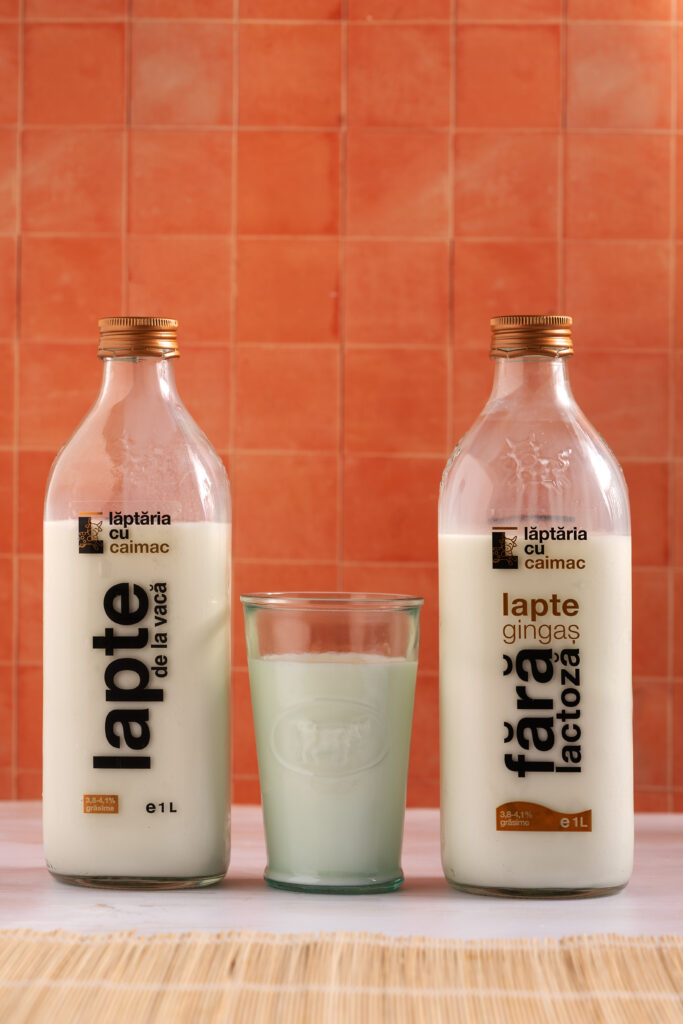
We chose to homogenize our milk because we want every single glass to taste as good as the first. Homogenization also offers practical benefits: it creates a smoother, more uniform texture and maintains consistent fat distribution. Consequently, it performs better in coffee, creating a stable, silky foam for cappuccinos and lattes.
Additionally, eliminating a thick top layer of cream helps maintain product stability throughout its shelf life. Cream that rises to the top is delicate and spoils faster due to oxidation exposure.
In short, homogenization neither alters the nutritional value of milk nor serves as a freshness indicator. It is a technological choice that allows us to preserve authentic milk while offering uniform consistency and a consistent experience with every glass.
Pure milk, straight from the farm
We preserve the natural fat of our milk because it defines its flavor and structure, and we choose not to interfere unnecessarily. We pasteurize it gently because safety should never come at the cost of freshness. We package it in glass bottles because we believe in clean, transparent packaging tailored to a clean product.
Milk is not just a list of percentages and components; it is a whole food with a story that begins in the crop fields, continues through cow care, and arrives in just a few steps at the bottle on the shelf.
When every detail is handled with care, milk remains what it was meant to be: simple, safe, delicious, and real.